
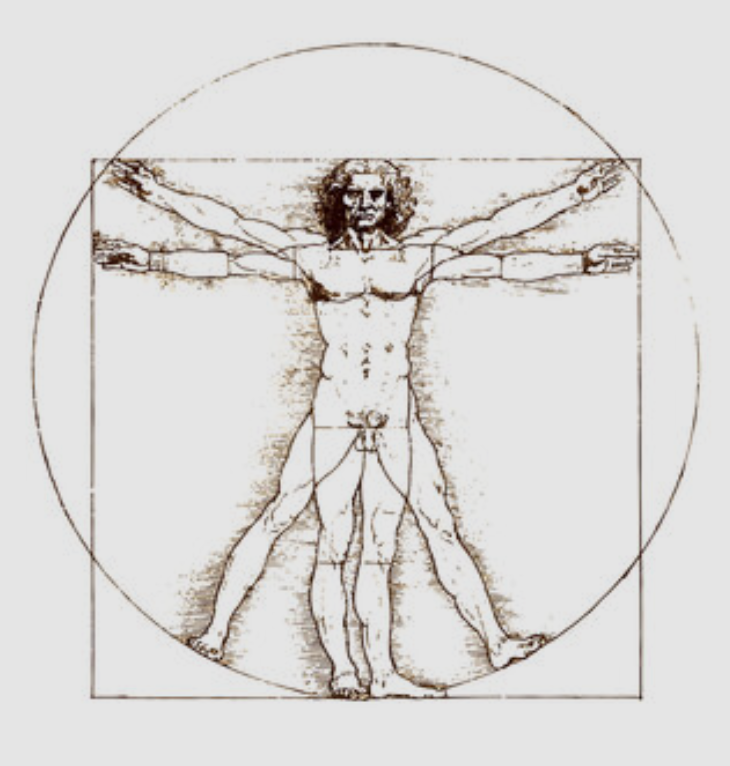
Something is shifting in the way we think about intelligence.
Not long ago the question was whether machines could think. Whether AI could become sentient, whether AI will replace us by taking over all the work that we do. Now the question is subtler and more unsettling – not whether they can think, but whether thinking is enough. Whether the thing we most need from intelligence is something that precedes thought. Something that lives in the body, in the history, in the long-accumulated residue of being present in a life.
Put a piece of music on. Not to demonstrate anything. Just to listen.
AI can listen to that piece of music and tell you everything about it. The metadata, the key signature, the tempo, the harmonic structure, the biographical context of the composer, the cultural moment it emerged from. All of that is available, instantly, accurately, to any system with an internet connection.
Just listen for something else, the other thing. The thing that happens when a particular piece of music finds you at a particular moment in your life and does something to you that you will carry for the rest of it. The way a chord change can open something in the chest that you didn’t know was closed. The way a melody can return you, without warning and without permission, to a room you haven’t thought about in twenty years – the smell of it, the light, the specific weight of who you were then and what you didn’t yet know was coming.
That is not retrieval. That is not pattern recognition. That is a living system responding to the world from the inside – from the accumulated weight of everything it has been through, everything it has loved, everything it has survived.
No algorithm has survived anything.
AI is genuinely extraordinary – the speed, the synthesis, the range. A well-prompted system can describe the emotional architecture of a Coltrane solo with precision and even beauty. It can map the neuroscience of why minor keys move us, explain the cultural history of the blues as a technology for metabolising grief, generate on request an essay of such technical fluency about music and human longing.
But it has never heard a song at the wrong moment and had to pull over.
It has never sat with an album after someone left and understood, without deciding to understand, that this particular sequence of sounds was now permanently altered that you would never hear it the same way again because you are not the same person who heard it the first time, and that person is gone now, and the music knows.
That knowledge – the kind that accumulates in a body over a lifetime of listening and losing and beginning again has no digital form. It cannot be scraped, indexed, or retrieved. It exists in lived experience, in the irreducible fact of having been present in a life as it actually happened, in real time, with real consequences, in a world that pushed back.
Consciousness, as the science now suggests, is not an emergent property of sufficient computation. It is something that living systems generate from the inside, from integration, from irreducibility, from the fact of being shaped by a world you cannot control and cannot predict and cannot opt out of.
The idea that experience is not what the brain produces but what the brain is, at its most integrated and alive.
The most consequential intelligence – the kind that understands not just what people say but what they carry, not just what populations report but what they have quietly decided – that intelligence has to be rooted in biology. In the science of living systems. In the actual, measurable, scannable signatures of how human brains process a world that is always, in the end, emotional before it is rational. This can never be replication, but it must be understanding.
A mirror, however perfect, cannot tell you who you are. It can only show you what you look like from the outside. What any organisation navigating genuine uncertainty needs is a way of knowing that comes from the inside – from the human system itself. From the part of collective intelligence that surfaces only in longitudinal time, in trusted instruments, in science patient enough to watch what people carry across decades, not just what they say in the moment.
That is rare. It is also, it turns out, the only thing that matters when the decisions are real.
The inherently temporal nature of music is important, it happens to you across time, which makes it a perfect vehicle for the longitudinal argument that sits at our core.
You will never hear a piece of music the same way again because you are not the same person who heard it the first time” – it’s about lived experience over time.