
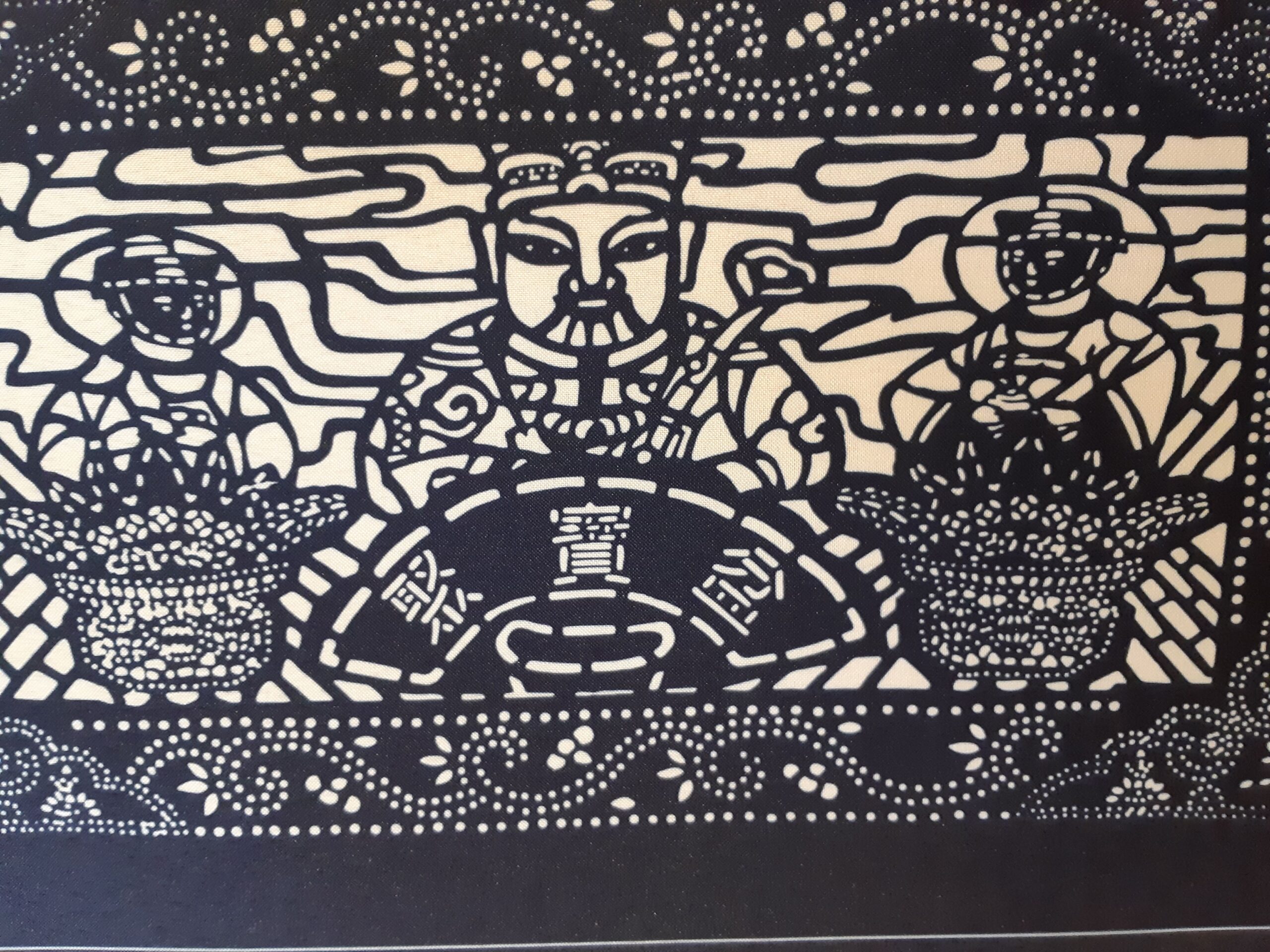
Here is a question that rarely gets asked in AI development circles: whose understanding of human personality is baked into the systems we are building?
Not whose data. Whose framework. Whose theory of what a person is, how they think, what motivates them, and how they relate to others.
Our 2023 paper, Mapping Personality Types and Cultural Dimensions: Implications for AI as an Evidence Base for Theoretical Meta-Analyses, starts from a simple but underappreciated observation: the dominant personality frameworks in use today — the 16-type Jungian model, the Keirsey Temperament Sorter, even the Big Five — were developed from within a broadly Western, individualistic worldview. And the cultural dimensions frameworks that have tried to map the full diversity of human values across societies reveal just how partial that worldview is.
The core argument is this: if AI systems are to genuinely serve a global user base — not just a Western one — they need to be able to read people through cultural lenses that account for the fundamental difference between East and West, between individualist and collectivist orientations, between direct and indirect communication, between self-oriented and community-oriented understandings of identity itself.
The Problem with Western-Default Personality
Keirsey’s work, building on Jung, was a landmark in making personality typology accessible and practically useful. But as researchers including Barrett (2005) have documented, the Keirsey framework as originally expressed carries a distinctly Western set of assumptions. The western perspective, as the paper notes, places emphasis on individualistic values — personal achievement, self-expression, direct assertion of preferences and needs. The alternative perspective — characteristic of many East Asian, South Asian, African, and Latin American cultural contexts — emphasises community values, the importance of empathy and interpersonal skill, and an understanding of the self as fundamentally relational rather than autonomous.
This is not a minor calibration difference. It is a fundamental divergence in what personality is for. In one frame, personality describes how an individual distinguishes themselves from others. In the other, it describes how an individual fits into, contributes to, and harmonises with a social whole.
An AI system built on the first frame will consistently misread — or simply fail to register — the cognitive and motivational orientations of the billions of people for whom the second frame is the lived reality.
Four Frameworks, One Argument
The paper works through four major cultural dimensions frameworks, reading them alongside the personality literature to build a composite picture of the East/West divide and its implications.
Edward T. Hall (1976) gave us the foundational distinction between high-context and low-context communication. In low-context cultures — characteristic of Northern Europe, North America, Australia — meaning is carried primarily in explicit, verbal content. Say what you mean, mean what you say. In high-context cultures — characteristic of East Asia, the Middle East, much of Africa and Latin America — meaning is carried in context, relationship, silence, and implication. The same words mean different things depending on who says them, to whom, and in what setting. Hall also mapped differences in how cultures experience time (monochronic vs. polychronic) and space (proxemics). These are not stylistic preferences. They are deep structures of how reality is organised and communicated.
Fons Trompenaars (2012) extended this with seven dimensions of cultural difference, placing particular weight on the contrast between universalism (rules apply equally to everyone, regardless of relationship) and particularism (the relationship shapes how rules are applied). This is the difference between a culture where a contract is a contract and a culture where a contract is a starting point for a conversation shaped by trust and context. Trompenaars also mapped the individualism-communitarianism axis, the distinction between achievement-oriented and ascription-oriented cultures (what you do vs. who you are), and contrasting orientations toward time and the environment.
Geert Hofstede (2001) provided the most extensively validated empirical mapping of cultural values across nations, with six dimensions: power distance, individualism-collectivism, masculinity-femininity, uncertainty avoidance, long-term vs. short-term orientation, and indulgence vs. restraint. The individualism-collectivism axis alone — which maps almost directly onto the East/West divide identified in the personality literature — shows a profound and stable difference in how people understand the relationship between the self and the group.
Erin Meyer brings this into the contemporary business world with eight dimensions focused on practical interaction: how directly do people communicate? How is negative feedback delivered? How is trust built — through tasks or through relationships? How is time approached — as linear or flexible? Meyer’s framework is particularly useful because it makes the East/West contrast legible in everyday interaction terms rather than abstract value terms.
What This Means for AI
Taken together, these frameworks build a compelling case that the East/West divide is not a single spectrum but a cluster of related differences operating simultaneously — in communication style, in the relationship between self and group, in the role of context and relationship in meaning-making, in attitudes toward authority, time, and uncertainty.
Current AI systems — trained predominantly on Western data, evaluated by Western teams, optimised for Western user expectations — are essentially fluent in one half of this landscape. They can read and generate low-context, individualistic, achievement-oriented communication with reasonable facility. They are, at best, clumsy with the other half. At worst, they impose Western frameworks on non-Western users in ways that are invisible to the system but deeply felt by the person.
The implication is not simply that AI systems need more diverse training data — though they do. It is that the frameworks used to understand, classify, and respond to human behaviour need to be culturally calibrated. When an AI agent is interacting with a user, it should be able to read cues about cultural context and personality orientation and adjust its responses accordingly — not just in language, but in communication style, relational register, and the implicit assumptions it makes about what the user wants and how they want to be addressed.
This is what the paper means by “better fit to the user/reader/agent”: not personalisation in the shallow sense of remembering your name and preferences, but genuine attunement to the cultural and cognitive orientation the user brings to the interaction.
The Evidence Base We Are Building
The paper’s contribution is to lay out, systematically, the theoretical evidence base that would be needed to operationalise this kind of attunement. By mapping the intersections between personality typology and cultural dimensions theory — showing how the East/West distinction appears consistently across Keirsey, Hall, Trompenaars, Hofstede, and Meyer — it provides a foundation for the meta-analyses that would be needed to translate these frameworks into AI design and evaluation criteria.
This is early-stage, foundational work. But it is the kind of work that is necessary before the more applied questions can be answered. Before you can build an AI that genuinely fits its user, you need to understand the full range of what a human being might be — not just the slice that Western personality psychology has mapped.
That understanding exists. It is sitting in several decades of cross-cultural research that AI development has largely not yet engaged with. Our paper is a step toward changing that.
Read the Full Paper
Bitetto, P., Anderson, B., & Benjamin, C. (2023). Mapping Personality Types and Cultural Dimensions: Implications for AI as an Evidence Base for Theoretical Meta-Analyses. Open Journal of Social Sciences (SCIRP). Available via ResearchGate: https://www.researchgate.net/publication/376585210