
Most diagnostic frameworks tell you who you are. They give you a profile, a type, a set of traits — and then invite you to recognise yourself in the description. The better ones are somewhat accurate. The best ones are surprising.
The RGB framework does something different. It does not just describe how you see yourself. It describes how others see you — and more importantly, it maps the distance between the two. That gap, it turns out, is where most of the friction in human systems lives: in teams, in negotiations, in change processes, in any situation where people with different orientations are trying to get something done together.
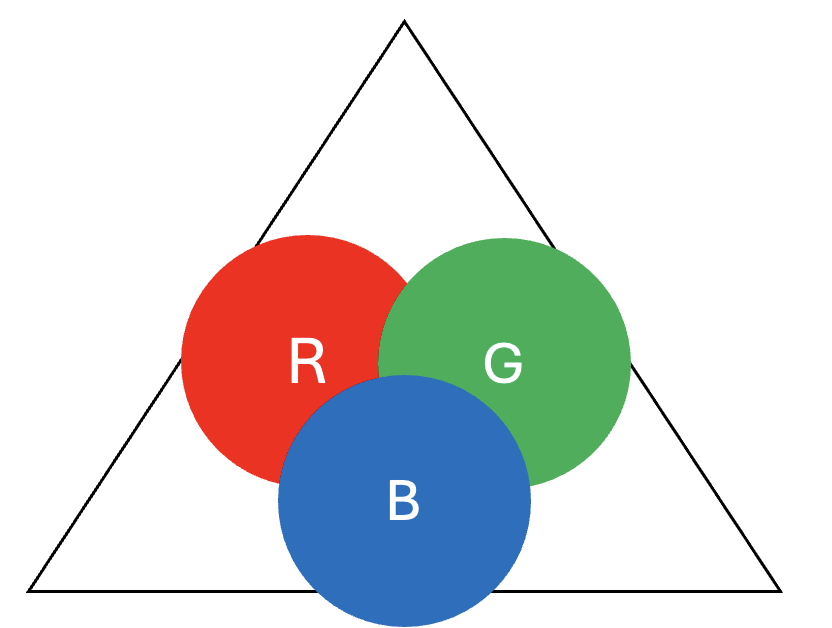
RGB is a behavioural diagnostic derived from a nine-question survey. Respondents allocate priorities across three options, and the cumulative scores identify which of three orientational perspectives is dominant. The three perspectives are named RED, GREEN, and BLUE — not as metaphors but as neutral anchors, deliberately chosen to carry no prior associations, no occupational connotations, no hierarchy.
What the framework reveals is not personality in the fixed-trait sense. It reveals the lens through which a person characteristically processes situations, relationships, and decisions — and the systematic misreadings that lens produces in people oriented differently.
RED
RED’s self-image is of an efficient, focused person who gets things done while others are still deliberating. RED values directness and does not experience its assertiveness as aggression — it experiences it as clarity. In RED’s view, cutting through is doing everyone a favour. The path is obvious; the hesitation of others is the problem.
What RED does not see — and this is the central structural fact of the framework — is how it lands.
BLUE experiences RED as demanding, unfair, and arrogant. GREEN experiences RED as arbitrary, insensitive, overbearing, and inconsistent. Neither of these readings is how RED understands itself at all. RED is not trying to dominate. It is trying to achieve. But the pace and directness that RED experiences as helpfulness, others experience as pressure and exclusion.
RED is most valuable in environments that require decisive action, clear direction-setting, and forward momentum. It becomes destructive when it mistakes compliance for genuine buy-in — when the speed that RED experiences as efficiency produces outcomes that are fragile because no one was genuinely brought along. Coaching RED does not mean slowing it down. It means giving it accurate feedback about when its pace is generating durable results and when it is generating resentment that will surface later.
BLUE
BLUE’s self-image is of a thorough, fair-minded person who brings rigour and flexibility to problems. BLUE sees its process-orientation as a strength — a way of ensuring that decisions are well-founded and that risks are understood before commitment. BLUE believes it is protecting others from consequences they have not adequately considered.
Again, the gap is structural.
RED experiences BLUE as tedious, time-consuming, and resistant to the need for rapid response. GREEN experiences BLUE as bureaucratic, legalistic, and constraining. BLUE is not trying to obstruct — it is trying to get it right. But the rigour that BLUE experiences as quality assurance, others experience as an obstacle to action.
BLUE is most valuable in environments that reward evidence-based decision-making, scenario analysis, and the disciplined identification of risk. It becomes a liability when its analytical cycle consumes the decision window it was meant to serve — when the thoroughness that is BLUE’s genuine contribution arrives too late, or in a register that reads as resistance rather than care. Coaching BLUE means helping it distinguish the situations that genuinely require full analytical treatment from those where a good-enough decision made now is strategically superior to a perfect decision made after the moment has passed.
GREEN
GREEN’s self-image is of a responsive, caring, inclusive person who builds collective capability and makes outcomes sustainable. GREEN sees its consensus-seeking not as indecision but as recognition that a decision only holds when people have been genuinely heard. GREEN believes its relational investment is what makes the difference between change that is announced and change that actually happens.
The gap here is perhaps the most revealing of the three.
RED experiences GREEN as passive, weak, unfocused, and as abdicating responsibility. BLUE’s view is more complex — and more interesting. BLUE sees GREEN partly as manipulative and unnecessarily delaying, and partly as genuinely responsive, caring, and developmental. This split makes the BLUE–GREEN pairing the most nuanced in the framework: BLUE can actually see GREEN’s value, even while finding its process frustrating. It is the pairing most capable of productive tension, if the tension is named rather than avoided.
GREEN is most valuable in environments that require sustained implementation, coalition-building, and the kind of relational capital that makes large-scale change durable. It becomes a liability when its process orientation has no defined closing point — when consultation becomes a substitute for decision rather than a precondition for it. Coaching GREEN means helping it recognise that its natural style, experienced by itself as inclusive and caring, is experienced by RED as weakness and by BLUE as hidden agenda — and developing the capacity to hold a position and close a decision without feeling that doing so betrays the people it is trying to serve.
What the Framework Is Actually For
The power of RGB is not in the profiles. It is in the cross-perception table — the systematic mapping of how each colour sees the other two, and how each is seen.
Most conflict in human systems is not conflict about facts or interests. It is conflict about misreading. RED is not actually trying to override GREEN. GREEN is not actually trying to delay RED. BLUE is not actually trying to obstruct anyone. But each experiences the others through a perceptual lens that consistently misinterprets the other’s behaviour as its worst-case reading, rather than its intended meaning.
Naming this explicitly — putting the cross-perception table on the table — does something that most conflict resolution approaches do not. It depersonalises the friction. What felt like a personality clash becomes a legible structural misreading. What felt like bad faith becomes a predictable consequence of different orientations meeting without a shared interpretive framework.
For communications, the implication is direct: your natural register — the one that feels most authentic to you — will be read through the other colour’s perceptual lens. That is not an invitation to be inauthentic. It is an invitation to be effective. Communicating to RED means leading with outcomes and timelines. Communicating to BLUE means leading with evidence and options. Communicating to GREEN means leading with people and purpose. Same message, different entry point. The content does not change. The relationship to the receiver does.
For team design, the framework makes a structural argument that should be taken seriously: a team without GREEN makes fast, rigorous decisions that fail in implementation because no one brought people along. A team without RED analyses and consults indefinitely. A team without BLUE acts quickly on insufficient information. The ideal is not a team of one colour operating smoothly — it is a team of all three, with a facilitator who uses the friction productively rather than suppressing it.
The Deeper Point
RGB sits within the broader BrainPrint diagnostic architecture as one of several lenses through which human orientation can be understood and applied. It is not a complete picture of a person. It is a map of a specific, important dimension: the gap between self-perception and the perception of others.
That gap is where coaching begins. It is where communication strategies need to be built. It is where conflict resolution work has to start if it is to produce anything more than temporary compliance.
Understanding your RGB profile does not tell you who you are in some fixed or final sense. It tells you how you tend to process the world — and how that processing tends to land on people whose lens is different from yours. That is the beginning of something genuinely useful: not self-knowledge as an end in itself, but self-knowledge in relationship — an understanding of the space between you and others that makes it navigable.
One last thought: if you read the RED profile and thought “that’s not me, I’m just efficient” — you might be RED. If you read it and thought “I need to document this finding and cross-reference it against three alternative frameworks before forming a view” — you’re almost certainly BLUE. And if your first instinct was to check whether everyone else in the room was okay before deciding what you thought — GREEN.
You’re welcome.